
Free resource: Before you start planning a new site, use the Small Business Digital Marketing Checklist to spot gaps in your online presence, from website basics to local visibility. Download the Troy, IL marketing checklist.
A website redesign is more than a visual cleanup. For a small business, it can be the difference between a site that quietly loses leads and one that helps people find you, trust you, and take action. If your current site feels slow, outdated, hard to manage, or disconnected from your business goals, it may be time to upgrade the strategy behind your web design, not just the colors and fonts.
For local businesses in and around Troy, IL, your website often acts as the first impression before someone calls, visits, requests a quote, or compares you with a nearby competitor. The signs below will help you decide whether your site needs a small refresh, a deeper rebuild, or a full redesign focused on better user experience, search visibility, and lead generation.
How do you know when your website needs a redesign?
Your website probably needs a redesign when it no longer supports the way customers find, evaluate, and contact your business. Common warning signs include declining leads, poor mobile performance, slow pages, outdated branding, confusing navigation, weak SEO, and content that is difficult to update. The key question is not whether the site looks "old" to you, but whether it is helping real visitors move confidently from interest to action.
A redesign should solve business problems. If your site gets traffic but few inquiries, the issue may be unclear messaging or weak calls to action. If people leave quickly on mobile, the issue may be layout, load speed, or hard-to-tap buttons. If your team avoids updating the site because it is frustrating, the technical foundation may be holding your marketing back.
Before you invest, look at the site through a customer's eyes. Can they quickly understand what you do, who you serve, where you operate, and what to do next? If not, a website redesign may be one of the most practical marketing moves you can make.

1. Your website does not work well on mobile
A mobile-friendly site is no longer optional. Many customers discover local businesses from a phone while searching, comparing options, checking hours, reading reviews, or looking for directions. If your website requires pinching, zooming, awkward scrolling, or too much patience, visitors may leave before they ever learn why your business is worth contacting.
Poor mobile user experience can show up in small but costly ways. A phone number may be hard to tap. A form may be too long for a small screen. A menu may collapse awkwardly, hiding important service pages. Images may push the main message too far down the page, forcing visitors to hunt for basic information.
A redesign can fix these issues by building around mobile behavior from the beginning. That means clear page hierarchy, readable text, fast-loading images, simple navigation, and calls to action that are easy to use with a thumb. Good mobile web design makes the next step obvious whether someone is at home, at work, or sitting in a parking lot deciding which local business to call. Explore our web design services for Troy, IL businesses.
2. Your pages load too slowly
Speed affects both patience and perception. When a site takes too long to load, visitors may assume the business is outdated, disorganized, or not worth the wait. Even if they stay, a slow experience can make every interaction feel harder than it should.
Common causes include oversized images, old plugins, bloated themes, unnecessary scripts, cheap hosting, and pages built without performance in mind. A site can look attractive and still perform poorly if the technical structure underneath is heavy or poorly maintained.
A practical website redesign should include performance improvements, not just new visuals. That may involve compressing images, simplifying layouts, cleaning up code, choosing better hosting, reducing plugin dependency, and designing pages around what users actually need. Faster pages help visitors engage more easily, and they also support stronger SEO because search engines want to send users to sites that work well.
Quick speed warning signs:
- Large homepage images appear slowly or shift around as the page loads.
- Mobile pages feel noticeably slower than desktop pages.
- Visitors complain that forms or service pages take too long to open.
- Your site feels sluggish after adding plugins, pop-ups, tracking scripts, or new media.
- You avoid sending people to the site because you are unsure how it will perform.
3. Your design looks dated or no longer builds trust
Visitors make quick judgments. If your website looks like it was built years ago and never revisited, people may question whether your business is current, attentive, or professional. That may not be fair, but it is how online first impressions work.
An outdated design is not only about style. It can include cramped layouts, tiny text, low-quality images, inconsistent spacing, generic stock photos, broken visual elements, or pages that feel cluttered. These details create friction because visitors have to work harder to understand what matters.
A modern redesign gives your business a cleaner, more credible presentation. Strong web design uses visual hierarchy to guide attention, places important information where people expect it, and makes the site feel consistent from page to page. For a local service business, restaurant, retailer, consultant, or contractor, that credibility can influence whether someone calls you or keeps scrolling through search results.
4. Your website no longer matches your brand
Small businesses evolve. You may offer new services, serve a different audience, have updated pricing structures, improved your process, changed your logo, refined your voice, or expanded beyond the original version of the business. If your website still reflects an older version of who you are, it can confuse visitors and weaken your marketing.
Brand misalignment often appears in simple places. Your homepage may highlight services you no longer prioritize. Your photos may not match your current team, location, or customer experience. Your tone may feel too formal, too vague, or too generic compared with how you actually talk to customers.
A redesign helps bring your message, visuals, and positioning into alignment. The goal is not to make the site trendy. The goal is to make it accurate, clear, and recognizable. When your website matches your current brand, every page reinforces the same story: what you do, why it matters, who you help, and how to take the next step.
5. Your site is not generating enough leads
A website that gets visitors but few calls, form submissions, bookings, or quote requests may have a conversion problem. Traffic alone does not grow a business. Visitors need clear reasons to trust you and clear paths to act.
Lead generation issues often come from unclear messaging. If the homepage does not quickly explain your services, location, and value, people may leave before exploring deeper pages. If calls to action are vague, hidden, or inconsistent, visitors may not know whether to call, schedule, request a quote, shop, or learn more.
A conversion-focused website redesign improves the path from landing to action. It places contact options where they make sense, simplifies forms, highlights trust signals, clarifies service benefits, and reduces distractions. For a Troy, IL business competing for local attention, these improvements can help turn casual browsers into real inquiries. Learn more about building an automated lead follow-up system.
Lead generation elements worth reviewing:
- A clear primary call to action on important pages.
- Easy-to-find phone, contact, booking, or quote options.
- Service pages that explain problems, solutions, and next steps.
- Local context where relevant, such as service area details.
- Trust-building content, such as reviews, project examples, credentials, or helpful explanations.
- Forms that ask only for the information needed to start the conversation.
7. Your SEO performance is declining
Search visibility can fade for many reasons, including stronger competitors, thin content, technical issues, poor page structure, slow performance, or outdated local SEO signals. If your site once brought in steady search traffic but now feels invisible, the problem may be deeper than a few missing keywords.
A redesign can improve SEO when it is planned carefully. That means preserving valuable pages, improving content quality, using clear headings, strengthening internal links, optimizing page speed, improving mobile usability, and making sure search engines can understand the site structure. It also means avoiding careless changes that remove ranking pages or break old URLs without proper redirects.
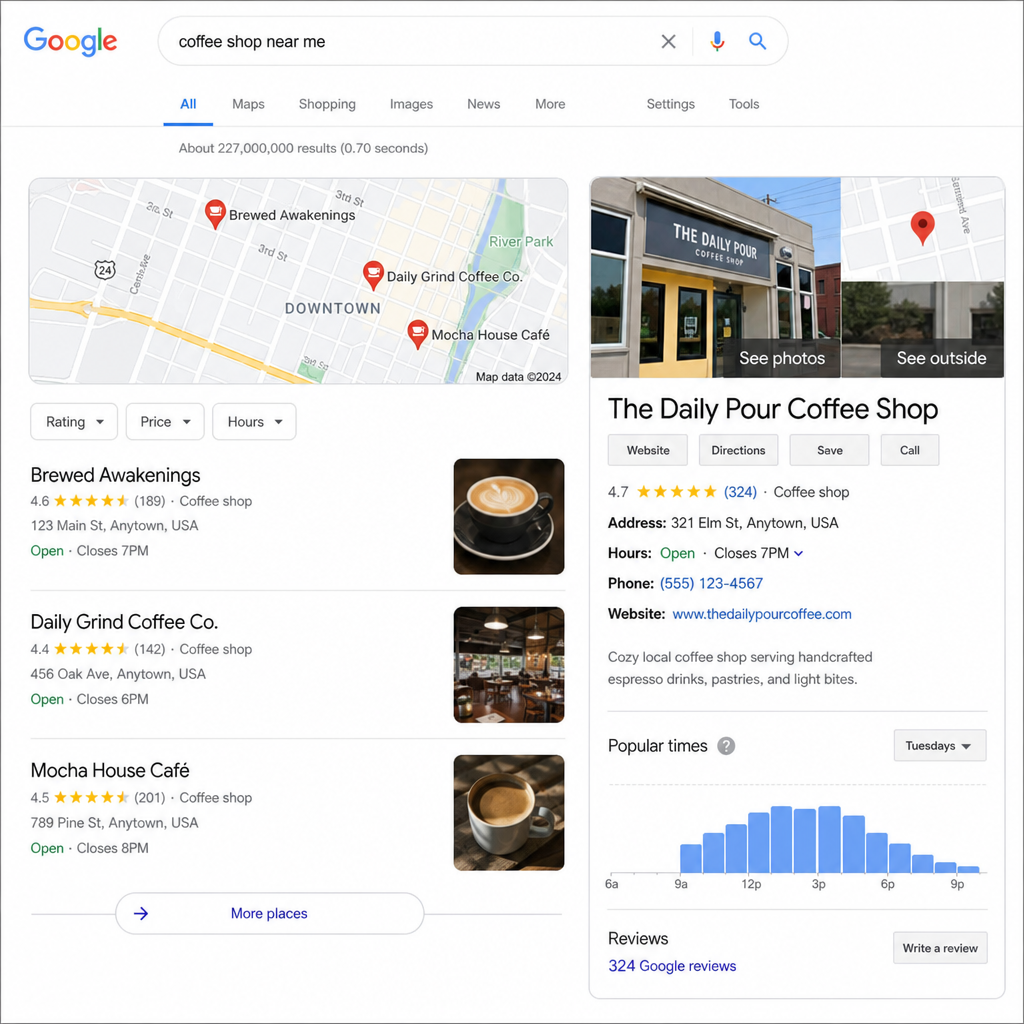
For local businesses, SEO is tied closely to relevance and trust. Your website should clearly explain your services, location, service area, and customer fit. If you are targeting customers in Troy, IL, for example, location should appear naturally where it helps visitors understand whether you are the right option, not stuffed into every sentence. Discover how our local SEO services in Troy, IL work together with your website.
8. Your content is outdated, thin, or hard to update
Outdated content sends the wrong message. Old service descriptions, expired promotions, former team members, inactive blog posts, broken links, and inaccurate contact details can make visitors wonder whether the business is still active. Even small errors can chip away at trust.
Sometimes the bigger issue is not the content itself but the system behind it. If your team cannot update a page without calling a developer, wrestling with a confusing editor, or risking a broken layout, your site becomes harder to keep current. That slows down marketing and makes every improvement feel like a project.
A website redesign can include a better content management setup. Depending on your needs, that might mean a more flexible platform, a simpler website builder, an ecommerce platform, or a custom approach. The right choice is the one your business can maintain without sacrificing performance, security, or the customer experience.
9. Your website is difficult to manage technically
A site that constantly breaks, depends on outdated plugins, or requires complicated workarounds can drain time and money. Technical issues may be invisible to visitors at first, but they often show up as broken forms, display errors, security warnings, slow pages, or features that stop working after updates.
This is especially frustrating for small business owners because the website should support marketing, not become another operational burden. If every simple change requires a rescue mission, your platform or build may no longer fit your needs.
A redesign can simplify the foundation. That might include cleaning up unnecessary tools, rebuilding templates, improving hosting, updating the CMS, or moving to a platform that better matches your team's skills. The benefit is not only a better-looking site. It is a site you can trust, update, and improve as your business changes. Learn how business automation can connect your website directly to contracts, scheduling, and payments.
10. Your competitors offer a better online experience
Your website does not exist in isolation. Customers often compare several options before reaching out. If competitor sites are faster, clearer, easier to use, more persuasive, or more visible in search, your business may lose opportunities before you ever know someone was considering you.
This does not mean copying competitors. It means understanding what customers experience while comparing options. Do competitors explain services more clearly? Do they show better photos? Are their forms easier? Do their pages answer questions yours ignores? Are they more visible for local searches?
A strong website redesign helps you compete by sharpening your own advantages. It can make your expertise easier to understand, your services easier to evaluate, and your next steps easier to complete. The goal is not to have the flashiest site in your market. The goal is to create a website that earns attention and makes action feel natural.
Redesign, refresh, or rebuild: choosing the right scope
Not every struggling website needs a full overhaul. Sometimes a focused refresh is enough. Other times, patching small issues only delays the inevitable. Choosing the right scope depends on how deeply the problems affect design, content, technology, and business goals.
A visual refresh may make sense when your site structure is solid but the design feels slightly dated. This can include updated colors, typography, imagery, calls to action, and page layouts. It is usually best when the platform still works well, SEO performance is stable, and visitors can already complete key tasks.
A strategic redesign is a better fit when the site has multiple issues across user experience, messaging, conversion, and SEO. This approach reviews the customer journey, restructures pages, rewrites important content, improves mobile performance, and modernizes the design. It is often the most practical option for small businesses that have outgrown their original website.
A full rebuild may be necessary when the technical foundation is weak. If the site is hard to update, insecure, slow, poorly coded, or built on a platform that no longer supports your needs, starting fresh may be more efficient than repairing problems one by one.
What should a small business website redesign include?
A small business website redesign should include strategy, structure, design, content, SEO, technical performance, and a plan for ongoing maintenance. It should begin with clear goals: more calls, more quote requests, better local visibility, easier updates, stronger credibility, or a smoother buying process. Without those goals, a redesign can become a surface-level makeover instead of a business asset.
The process should also include a careful review of what is already working. Some pages may rank well, attract qualified traffic, or answer important customer questions. Those assets should be improved and preserved, not accidentally removed. A smart redesign protects the value you already have while fixing the issues that hold the site back.
A practical redesign checklist:
- Business goals: Decide what the new site must help accomplish, such as more leads, bookings, sales, or local visibility.
- Audience clarity: Define who the site is for and what questions those visitors need answered.
- Page structure: Map essential pages, including homepage, services, about, contact, location or service area content, and key resources.
- Messaging: Clarify what makes your business useful, credible, and different.
- Mobile experience: Design for small screens, fast decisions, and easy actions.
- SEO preservation: Identify valuable existing pages, keywords, backlinks, and URLs before making changes.
- Conversion paths: Place calls to action where visitors are most likely to need them.
- Performance: Optimize images, code, hosting, and third-party tools.
- Tracking: Set up measurement for calls, forms, purchases, or other meaningful actions.
- Maintenance: Create a plan for updates, backups, security, content improvements, and regular reviews.
The best redesigns continue after launch
Launching a new site is a milestone, not the finish line. Websites stay effective when they are maintained, measured, and improved over time. A redesign gives you a stronger foundation, but ongoing attention keeps that foundation from becoming outdated again.
After launch, review performance regularly. Watch which pages attract traffic, which calls to action get used, where visitors drop off, and which service pages need more detail. Update content when your business changes, add helpful resources when customers ask repeated questions, and fix broken links or technical issues before they become visible problems.
A simple quarterly review can go a long way. Check your top pages, mobile performance, contact forms, local SEO details, images, plugins, and analytics. If you treat the website as an active marketing asset instead of a finished brochure, it will be much easier to keep it aligned with your business.
Turning website problems into growth opportunities
A website redesign is worth considering when your current site creates friction for the people you want to reach. Slow pages, weak mobile usability, confusing navigation, outdated content, poor SEO, and inconsistent branding all make it harder for visitors to trust you and take action. Fixing those issues can improve more than the look of your site; it can make your marketing clearer, more useful, and more effective.
The best redesign decisions start with honest evaluation. Look at your website the way a first-time customer would. Then look at it the way a business owner should: as a tool that needs to earn attention, support trust, and help create real opportunities.
If your site is no longer doing that, an upgrade may be the right next step.
Free resource: Want a simple way to review your website and broader online presence? Use the Small Business Digital Marketing Checklist to identify practical improvements you can make next. Get your free small business marketing checklist.