
A small-business website should make it easy for local customers to understand what you do, trust you, and take the next step. For businesses serving Troy, IL and nearby Metro East communities, that means clear messaging, smooth navigation, strong local signals, and a site that works just as well on a phone as it does on a desktop. The following website design mistakes are common errors that can quietly cost calls, form submissions, appointments, and walk-ins.
Free resource: Download my free Small Business Digital Marketing Checklist
Why do these website design mistakes matter for Troy, IL businesses?
Local customers usually arrive with a task in mind: they want to compare services, check whether you serve Troy, IL, confirm you look credible, and contact you quickly. If your website slows them down, makes them hunt, or creates doubt, they can leave and choose another nearby business within seconds. Good design is not just about appearance; it supports local visibility, trust, and conversion.
A strong local website should answer three questions fast:
- Who do you help? Make your audience obvious, whether that means homeowners, families, patients, drivers, property managers, or other local businesses.
- Where do you work? Mention Troy, IL naturally where relevant, along with your broader service area if you serve surrounding communities.
- What should visitors do next? Guide people toward calling, requesting a quote, booking, visiting, or sending a message.
1. Hiding the most important information above the fold
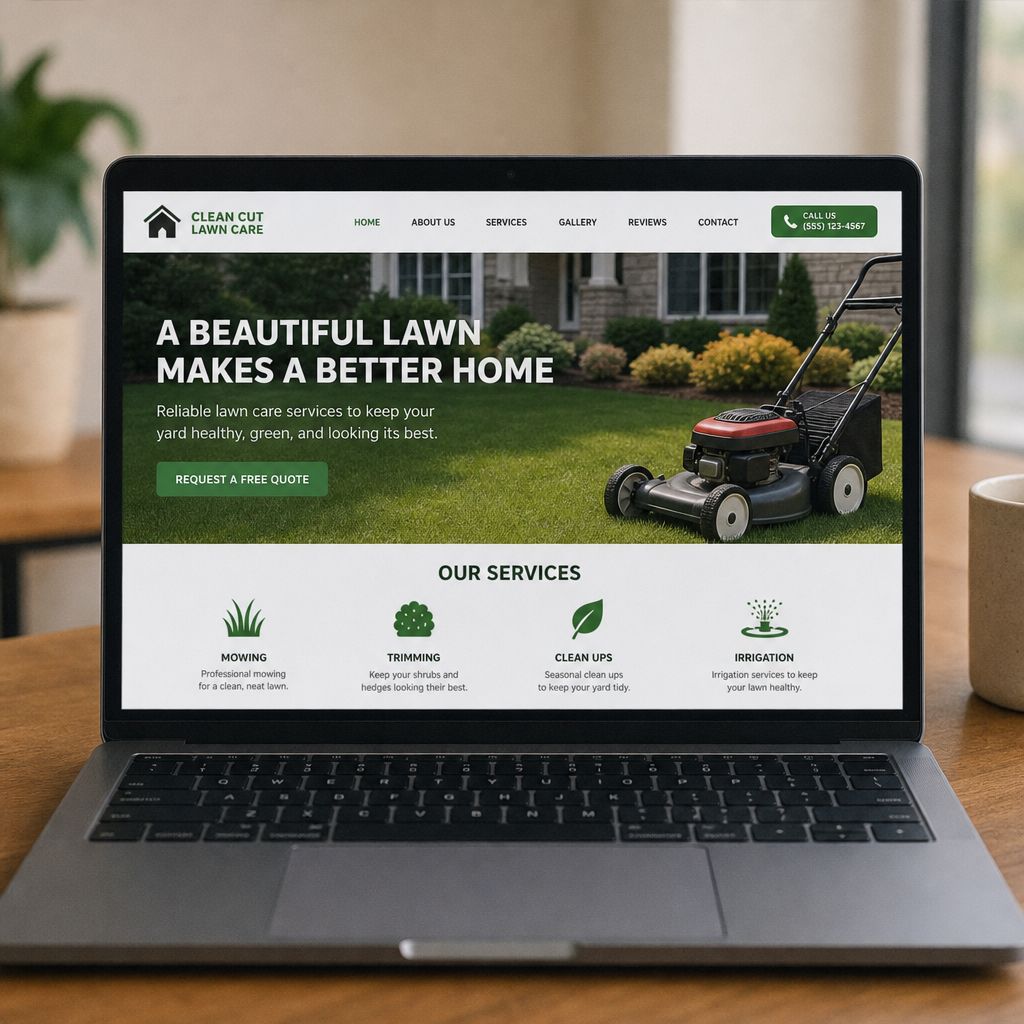
One of the most damaging website design mistakes is making visitors scroll before they understand the business. Your homepage should quickly communicate what you offer, who it is for, where you serve customers, and how to contact you. If the first screen is only a large image, vague slogan, or clever headline, the visitor may not wait for the rest of the page to explain things.
For a Troy, IL business, the top of the page should make the local connection clear. A visitor should not have to dig through the footer to learn whether you serve their area. This is especially important for service-based businesses because local intent is often urgent.
A stronger above-the-fold section usually includes:
- A clear headline that names the primary service or business type
- A short sentence explaining the benefit or customer outcome
- A visible phone number or contact button
- A local phrase such as “serving Troy, IL” when accurate
- A primary call to action, such as “Request an Estimate” or “Schedule a Consultation”
The goal is not to overload the top of the page. It is to remove uncertainty. When visitors instantly know they are in the right place, they are more likely to keep reading. If your site needs a clearer structure, explore our web design services in Troy, IL.
2. Creating navigation errors that make visitors work too hard
Navigation errors are among the most frustrating common errors because they affect every type of visitor. If your menu is crowded, unclear, or inconsistent, people struggle to find basic information. A potential customer should not need to guess whether pricing, services, contact details, reviews, or location information is hidden under a confusing label.
Simple navigation is usually better than clever navigation. Use familiar terms such as “Services,” “About,” “Reviews,” “Service Areas,” and “Contact.” If you have several services, group them in a logical way instead of forcing every visitor through the same generic page.
Good navigation also supports local SEO because it helps search engines and users understand the structure of your site. Each important service should have a clear path from the main menu or homepage. For example, a contractor, clinic, salon, repair company, or professional service provider in Troy, IL may benefit from dedicated pages for core services rather than burying everything in one long block of text.
Quick navigation checklist:
- Keep the main menu short and readable
- Use plain labels instead of branded or clever wording
- Make the phone number easy to tap on mobile
- Include a contact option in the header
- Avoid dropdown menus that are difficult to use on phones
- Link important service pages from the homepage
- Make sure the logo returns visitors to the homepage
When navigation feels effortless, visitors stay oriented. When it feels messy, they assume the business may be hard to work with too.
3. Designing for desktop while ignoring mobile users
Many local customers search on their phones while multitasking, driving passengers, standing in a store, or comparing options from home. If your website looks good on a large monitor but becomes cramped on mobile, you are creating friction at the exact moment someone may be ready to call. Tiny text, hard-to-tap buttons, overlapping sections, and slow-loading images all make a business look less reliable.
Mobile design should be treated as a core requirement, not a final check. Visitors should be able to read service descriptions, view photos, tap your phone number, complete a form, and use your menu without pinching or zooming. A mobile layout that feels clean and fast can make a small local business feel much more professional.
Pay close attention to forms. Long forms with too many required fields often discourage mobile users. If someone in Troy, IL is asking for a quote, appointment, or callback, collect only what you need to respond well.
Mobile-friendly improvements include:
- Large, readable body text
- Buttons with enough space around them
- Click-to-call phone numbers
- Short forms with clear labels
- Compressed images that load quickly
- Sticky contact buttons where appropriate
- Service pages that are easy to scan
A mobile visitor is not a less important visitor. In many cases, they are the closest to taking action.
4. Using vague copy that fails to build trust
A polished website can still underperform if the copy says very little. Phrases like “quality service,” “trusted professionals,” and “customer satisfaction” are common, but they do not explain what makes your business useful. Visitors need specifics: what you do, what problems you solve, what areas you serve, and what the process looks like.
For local search intent around Troy, IL, trust often starts with clarity. If you are a local provider, say so naturally. If you serve homeowners, small businesses, families, or commercial clients, make that clear. If customers should call for emergency service, book online, request a quote, or visit your location, explain the next step.
Stronger website copy answers practical questions:
- What service does the business provide?
- Who is the best fit for the service?
- What happens after someone contacts you?
- What information should they have ready?
- Which local areas are served?
- What makes the experience easier or more convenient?
Avoid making claims you cannot support. Instead of saying you are “the best in Troy,” explain your approach, your process, or the customer benefit. Specific, grounded copy feels more trustworthy than broad promotional language.
5. Stuffing every service onto one page instead of building useful service pages
It may seem efficient to place every service on one page, but that approach often creates a weaker user experience. Visitors have to scroll through information that may not apply to them, and each service receives less room for explanation. Search engines may also have a harder time understanding which page is most relevant for a specific local query.
A better strategy is to create clear, focused pages for your most important services. Each page can explain the problem, the service, the process, and the next step in more detail. This gives local customers a more relevant landing page when they search for a specific need in or near Troy, IL. Check out our guide on local SEO for Troy, IL small businesses.
For example, instead of one page that briefly lists ten services, a business might create separate pages for its main offerings. Each page can include helpful details such as signs the customer needs the service, what to expect, service-area language, and a direct call to action.
A useful service page often includes:
- A service-specific headline
- A short explanation of who the service is for
- Common problems or needs the service addresses
- A simple overview of the process
- Relevant local service-area details
- Photos, examples, or trust signals when available
- A clear CTA for that specific service
This does not mean every tiny offering needs a separate page. Focus on services that customers actively search for, ask about, or use to compare your business with competitors.
6. Forgetting lead capture and follow-up opportunities
A website should not rely only on visitors calling immediately. Some people are interested but not ready. Others may be comparing options, checking availability, or waiting for a decision from someone else. If your site has no way to collect leads, you lose the chance to continue the conversation.
Lead capture can be simple and respectful. A contact form, quote request, appointment request, downloadable checklist, newsletter signup, or special consultation request can give visitors a lower-pressure way to raise their hand. Automated follow-up can also help, such as confirmation emails, reminders, next-step instructions, or messages that route inquiries to the right team member. See our insights on lead management & follow-up systems.
For local businesses in Troy, IL, lead capture is especially helpful when customers research outside business hours. Someone may visit your site at night, on a weekend, or between errands. If the only option is to call during office hours, they may forget or contact a competitor instead.
Practical lead capture ideas include:
- A short “Request a Quote” form
- A “Schedule a Call” button
- A newsletter or local update signup
- A downloadable buyer’s guide or checklist
- A contact form tied to a confirmation email
- A follow-up sequence that explains next steps
- A thank-you page that sets expectations
The key is to make follow-up feel helpful, not pushy. Tell people what will happen after they submit their information and how soon they can expect a response if you know that detail.
7. Ignoring local credibility signals
Local customers want proof that your business is real, relevant, and easy to reach. A website without local credibility signals can feel anonymous, even if the business is nearby. This is one of the common errors that affects both trust and local search performance.
Local credibility signals do not need to be complicated. Mention Troy, IL where it makes sense, show accurate contact details, describe your service area, and include genuine photos if available. If you have reviews, testimonials, project examples, staff photos, certifications, or community involvement, use them carefully and accurately.
Important local trust elements may include:
- Business name, phone number, and contact details
- Clear service-area language for Troy, IL and nearby areas
- Embedded map or directions if customers visit your location
- Real photos of the business, team, work, or location
- Reviews or testimonials when you have permission to use them
- Links to relevant social profiles or business listings
- Consistent branding across the website and local profiles
Consistency matters. If your website says one thing and your online listings say another, customers may hesitate. Keep your hours, phone number, address, and service information aligned wherever your business appears online.
Where should you start fixing these common errors?
Start with the issues that directly block customer action. If people cannot understand what you do, navigate your site, use it on mobile, or contact you easily, those fixes should come before cosmetic updates. A beautiful website that hides the next step will still lose customers.
Use this quick priority list:
- Clarify the homepage. Make your service, audience, location, and CTA obvious.
- Simplify navigation. Remove confusing labels and make service pages easy to find.
- Check mobile usability. Test forms, buttons, menus, and page speed on a real phone.
- Improve service content. Give key services their own useful pages when appropriate.
- Add lead capture. Offer more than one way for visitors to start a conversation.
- Strengthen local trust. Add accurate Troy, IL service-area details and credibility signals.
- Review regularly. Revisit your website as customer needs, services, and local competition change.
The best website improvements are usually practical, not flashy. When your site clearly answers customer questions and removes friction, it becomes easier for people in Troy, IL to choose your business with confidence.
Want Help Fixing Your Small Business Website?
Book a free strategy call or contact us to discuss how to structure your website for maximum local visibility and lead generation.
Contact Hustle Boost