
If your business serves customers in the Troy area or the wider Metro East, local visibility can make the difference between being discovered and being overlooked. Local SEO helps your company appear when nearby people search for the products or services you offer, especially on Google Search and Maps. With the right approach, search engine optimization becomes more than a technical task; it becomes a steady path to better calls, visits, leads, and trust.
What does local SEO do for your business?
Local SEO improves how your business shows up in location-based searches, such as "near me" searches or searches that include a city, neighborhood, or service area. It helps connect your website, business listings, reviews, and online reputation so search engines can understand who you are, where you serve customers, and why your business is relevant. For small and growing companies, investing in local SEO services can help attract people who are already looking for a solution nearby.
Unlike broad SEO campaigns that may target national or global audiences, local SEO focuses on real-world customer intent. A person searching for a local plumber, accountant, restaurant, clinic, contractor, or retail store is often closer to taking action than someone casually browsing. That makes local search one of the most practical areas of digital marketing for businesses that rely on regional customers.
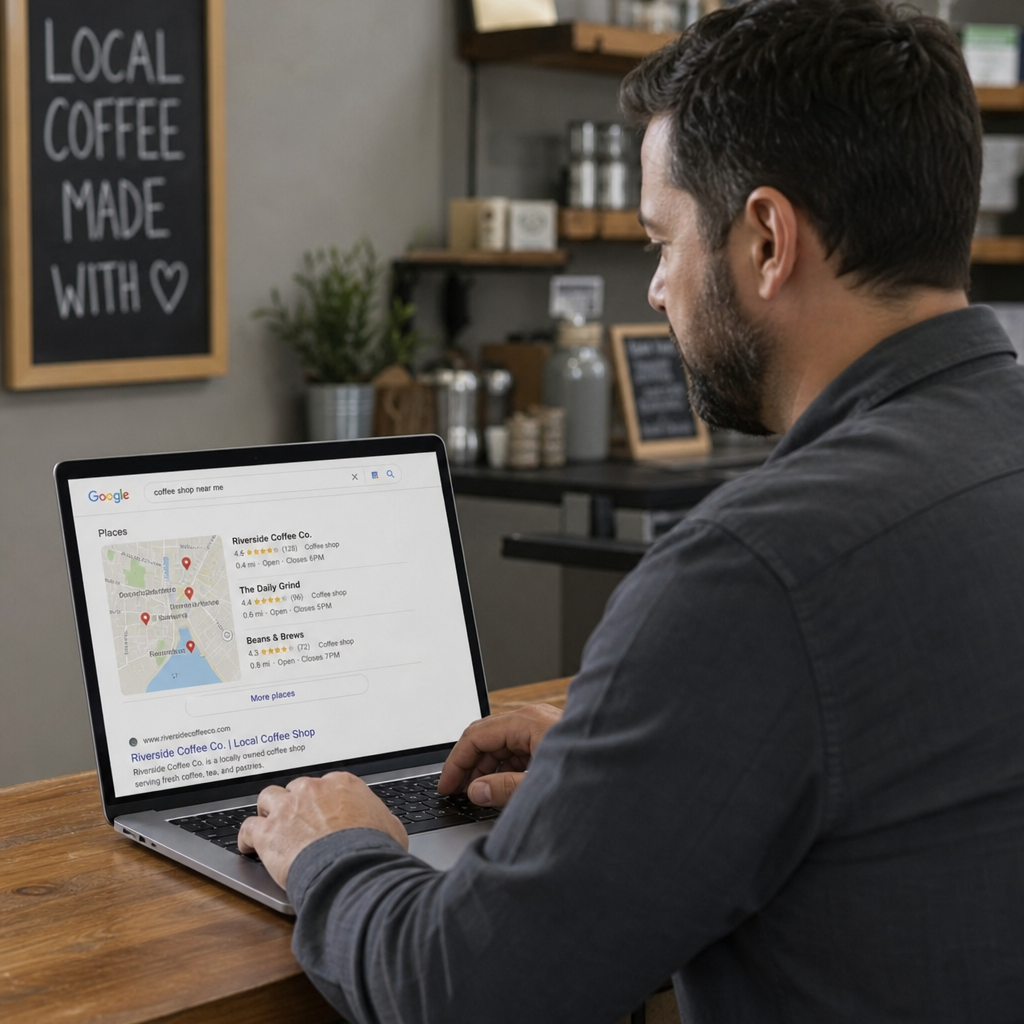
Local search intent starts with urgency
People use local search because they want something specific, convenient, and credible. They may need directions, hours, pricing guidance, service details, photos, reviews, or a fast way to contact your team. Your job is to make that information easy to find and consistent everywhere your business appears online.
Searches are often tied to immediate needs. Think queries like "HVAC repair near me," "dentist nearby," or "roofing contractor close by." If your online presence is clear and consistent, your business is more likely to show up in the local map results and earn the click or call.
Strong local search engine optimization works because it reduces friction. When your business profile is complete, your website is clear, and your reviews support your reputation, customers have fewer reasons to hesitate. They can quickly understand what you offer, whether you serve their area, and what step to take next.
A practical local strategy usually supports several customer actions:
- Calling your business directly from search results
- Requesting a quote or consultation through your website
- Visiting your physical location
- Reading reviews before making a decision
- Comparing your services with local competitors
- Saving your business for a future purchase
This is why local SEO is not just about rankings. Rankings matter, but the bigger goal is to turn visibility into qualified engagement.
The core pieces of a strong local SEO foundation
A successful local presence is built from several connected parts. Each one gives search engines and customers more confidence in your business.
Your Google Business Profile
For many local customers, your business profile is the first impression. It can show your address or service area, phone number, business hours, photos, reviews, services, and updates. A complete and accurate profile helps customers act quickly and helps search engines match your business to relevant local searches.
Keep this profile current. If your hours change, your services expand, or your contact information is updated, make those changes promptly. Outdated information can lead to missed calls, frustrated customers, and weaker trust signals.
If you travel to customers (for example, home services or mobile services), make sure your service area reflects where you actually do work without overstating coverage. If you have a storefront or office, double-check that your pin location and address are accurate.
Your website content
Your website should clearly explain what you do, who you serve, and where you work. Local landing pages, service pages, and helpful blog content can support SEO optimization by giving search engines more context. A page for each major service or location can be useful when it provides unique, helpful information rather than repeated copy. Check out our web design services to see how structured service pages improve conversion and search clarity.
To better match local search intent, make sure key pages naturally include location signals where they belong, such as:
- Your primary service area (for example, "Troy and the Metro East")
- Nearby cities you actively serve (only if true for your business)
- Local contact details and clear calls to action (call, book, request a quote)
Good local content answers practical questions. What does the service include? Who is it for? What should customers expect? What areas do you serve? When your website provides those answers clearly, visitors are more likely to stay, click, and contact you.
Business listings and citations
Business listings across directories, maps, social platforms, and industry sites should use consistent information. Your name, address, phone number, website, and business categories should match wherever possible. Inconsistent listings can confuse customers and weaken the clarity search engines rely on.
This does not mean you need to be everywhere. It means the places where you do appear should be accurate, complete, and aligned with your brand. Prioritize the major platforms (Google, Apple Maps, Bing Places, Yelp) and relevant industry directories. If it fits your business, local community and chamber listings can also help reinforce trust.
Reviews and reputation
Reviews influence both visibility and customer confidence. A steady pattern of genuine customer feedback can help people understand your quality, responsiveness, and service experience. Responding professionally to reviews also shows that your business is active and attentive. Learn more about automated review workflows in our reputation management guide.
Avoid shortcuts. Do not rely on fake reviews or aggressive review tactics. Instead, create a simple process for asking satisfied customers to share honest feedback after a successful interaction.
How should you choose local SEO services?
Choose local SEO services by looking for strategy, transparency, and practical fit rather than promises of instant rankings. A reliable provider should be able to explain what they will improve, how progress will be measured, and which activities matter most for your business model. The right partner should make local SEO feel understandable, not mysterious.
If you are comparing an in-house effort with a local SEO agency, start with your goals. A business with one location and limited competition may need a focused foundation: profile optimization, listings cleanup, review support, and basic website improvements. A business in a competitive part of the region or with multiple locations may need deeper content strategy, technical SEO, ongoing reporting, and broader digital marketing services.
Look for a provider that can help with essentials such as:
- Local SEO audit: A review of your website, listings, business profile, reviews, competitors, and local search visibility.
- Keyword and location research: Identification of the services, phrases, and geographic terms your customers actually use.
- Google Business Profile optimization: Updates to categories, services, descriptions, photos, posts, and conversion-focused details.
- On-page SEO improvements: Better title tags, headings, internal links, service content, location signals, and calls to action.
- Citation management: Cleanup and consistency across important business directories and platforms.
- Review strategy: A simple process for earning, monitoring, and responding to customer reviews.
- Reporting and recommendations: Clear updates that connect activity to business outcomes, not just keyword movement.
The best SEO services will not treat every business the same. A dental practice, roofing company, law firm, boutique, and home service provider all need different messaging, service pages, and conversion paths.
Local SEO and broader digital marketing work better together
Local SEO is powerful on its own, but it becomes stronger when it is connected to your wider marketing plan. Search visibility brings people in, while your brand message, website design, email follow-up, paid ads, and social presence help move them toward a decision. When these pieces work together, your business feels more consistent and credible at every touchpoint.
For example, a customer may first see your company in Maps, read several reviews, visit your website, browse a service page, and then return later through a social post or retargeting ad. Each step should feel like the same business: same promise, same tone, same contact details, same quality standard.
This is where digital marketing services can support local SEO. Paid search can help you test high-intent keywords. Social media can keep your brand visible between searches. Email marketing can nurture leads who are not ready to buy today. Content marketing can answer common questions and create more reasons for customers to trust you. Discover how automated follow-up captures incoming traffic on our lead management service page.
The goal is not to do everything at once. The goal is to create a practical system where each channel supports the next.
Common local SEO mistakes that hold businesses back
Many businesses have the basics in place but still struggle because small issues add up. Local SEO rewards clarity, consistency, and usefulness. When those are missing, search engines and customers may choose a competitor instead.
Watch for these common problems:
- Incomplete business profiles: Missing categories, services, photos, or hours can reduce confidence.
- Inconsistent contact information: Different phone numbers or addresses across listings create confusion.
- Thin location pages: Pages that only swap out city names without adding useful local detail rarely help visitors.
- Ignoring reviews: Unanswered reviews can make a business appear inactive or indifferent.
- Slow or confusing websites: If visitors cannot find what they need quickly, they may leave before contacting you.
- Keyword stuffing: Repeating the same city or service phrase unnaturally can make content harder to read and less trustworthy.
- No clear next step: Every important page should make it easy to call, book, request a quote, or ask a question.
Fixing these issues does not always require a complete rebuild. Often, steady improvements to your profile, website, listings, and content can create a stronger local presence over time.
What should you track to know if local SEO is working?
Track local SEO by measuring visibility, engagement, and real business actions together. Keyword rankings can be helpful, but they do not tell the full story. You also want to know whether people are calling, clicking, requesting directions, submitting forms, and spending meaningful time on your website.
Useful metrics include:
- Local search impressions (Search and Maps)
- Website visits from organic search
- Calls from your business profile
- Direction requests or location clicks
- Form submissions and quote requests
- Ranking changes for important service and location terms
- Review quantity, quality, and response rate
- Engagement on key service pages
Review these numbers regularly, but avoid reacting to every small fluctuation. Local search results can change based on proximity, competition, device, search history, and seasonality. Look for trends over weeks and months, then adjust your strategy based on what the data suggests.
A practical checklist for local SEO
If you are new to local SEO, begin with the fundamentals before moving into more advanced tactics. A strong foundation makes every future improvement more effective. Grab our free small business marketing checklist to track your progress interactively.
Use this starter checklist:
- Confirm your business name, address, phone number, and website are accurate everywhere.
- Complete your Google Business Profile with services, categories, hours, photos, and a clear description.
- Add helpful service pages to your website, especially for your most important offers.
- Include your service area naturally in relevant page copy.
- Make sure your website loads well and is easy to use on mobile devices.
- Create a simple process for requesting reviews from happy customers.
- Respond to reviews in a professional, friendly tone.
- Add clear calls to action on important pages.
- Publish content that answers real customer questions.
- Review performance monthly and improve based on results.

Local search engine optimization is an ongoing process, but it does not need to feel overwhelming. Start with the areas that affect customer trust and action first. Then build gradually with better content, stronger reviews, and more refined SEO optimization.
Turn local visibility into steady growth
Local SEO helps your business show up when nearby customers are ready to search, compare, and act. By improving your business profile, website, listings, reviews, and content, you create a clearer path from discovery to contact. Whether you manage it internally or work with a local SEO agency, the most effective strategy is consistent, customer-focused, and tied to real business goals.
Ready for a local SEO audit to identify the best next steps for improving visibility in your area? Contact Hustle Boost today to get started.